
Full installed length
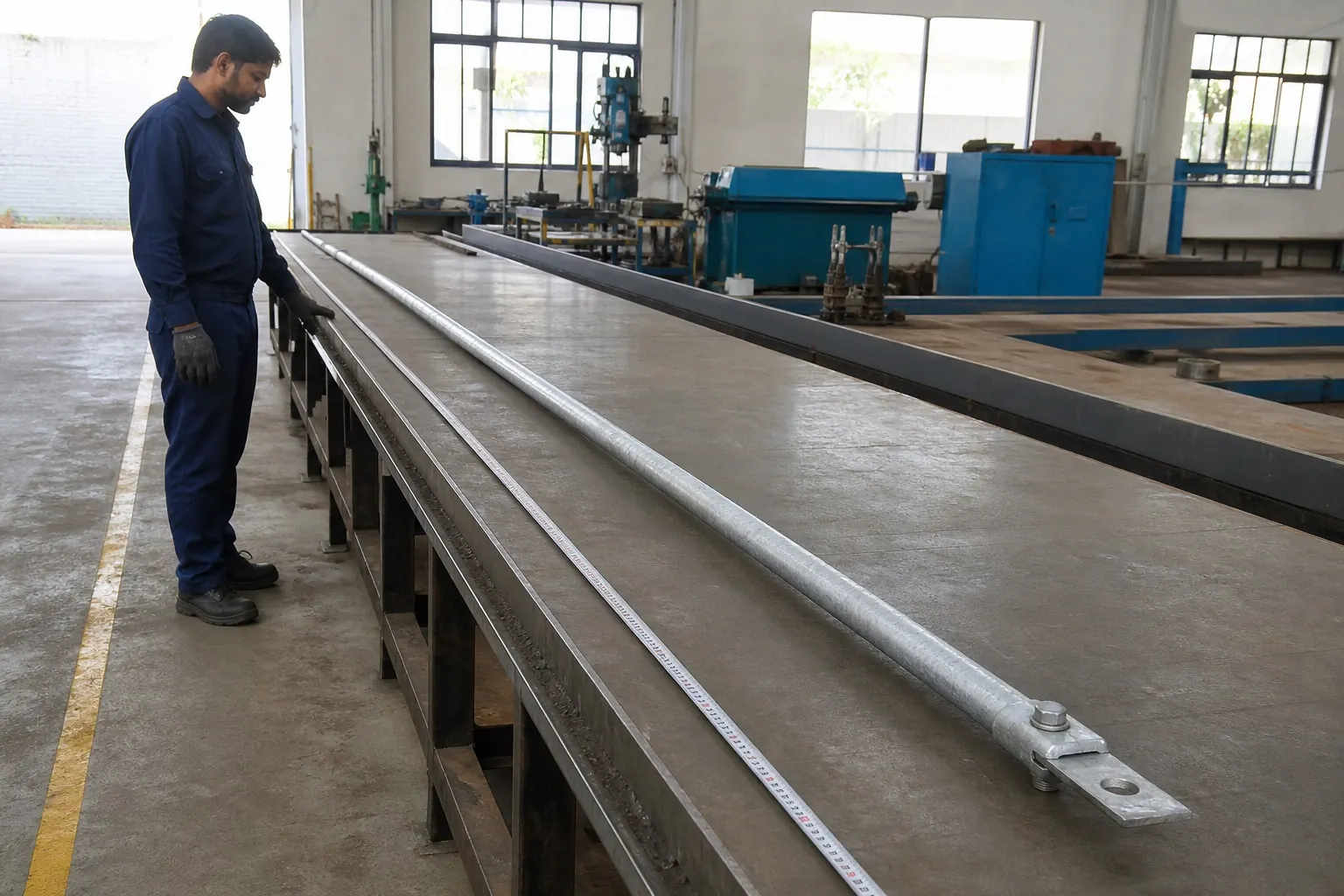
A display sample is not an installation detail. The offered electrode must enter the ground at its documented length.
Earthing installation service
Chemical earthing installation in Jaipur with full-length electrodes, wet backfill, 2 metre spacing, accessible joints and recorded testing.
Discuss the project inputsDirect answer
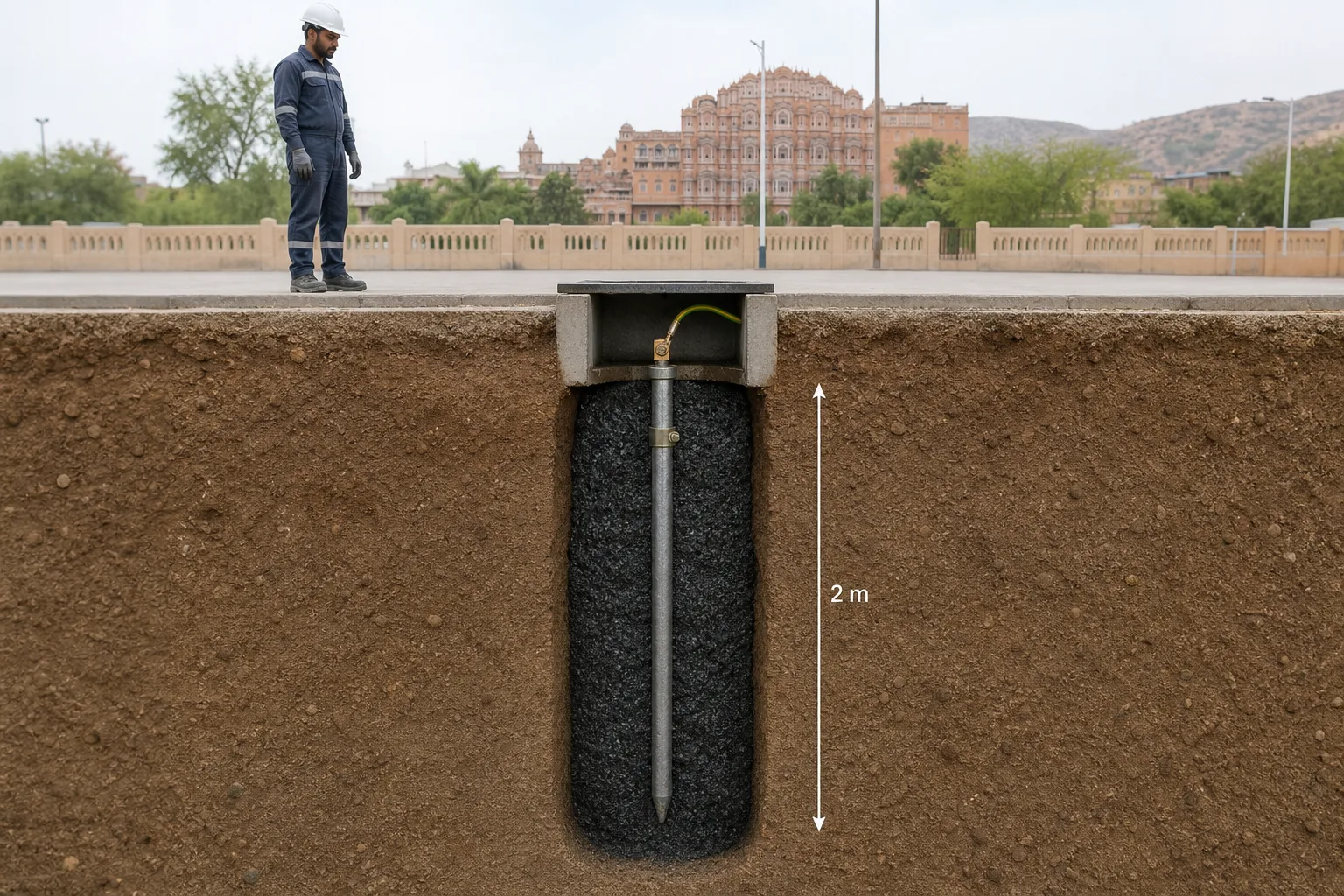
Use the full electrode. A chemical earthing installation should place the specified 2, 3 or 6 metre unit vertically, with the terminal and test connection left accessible after the civil work closes.
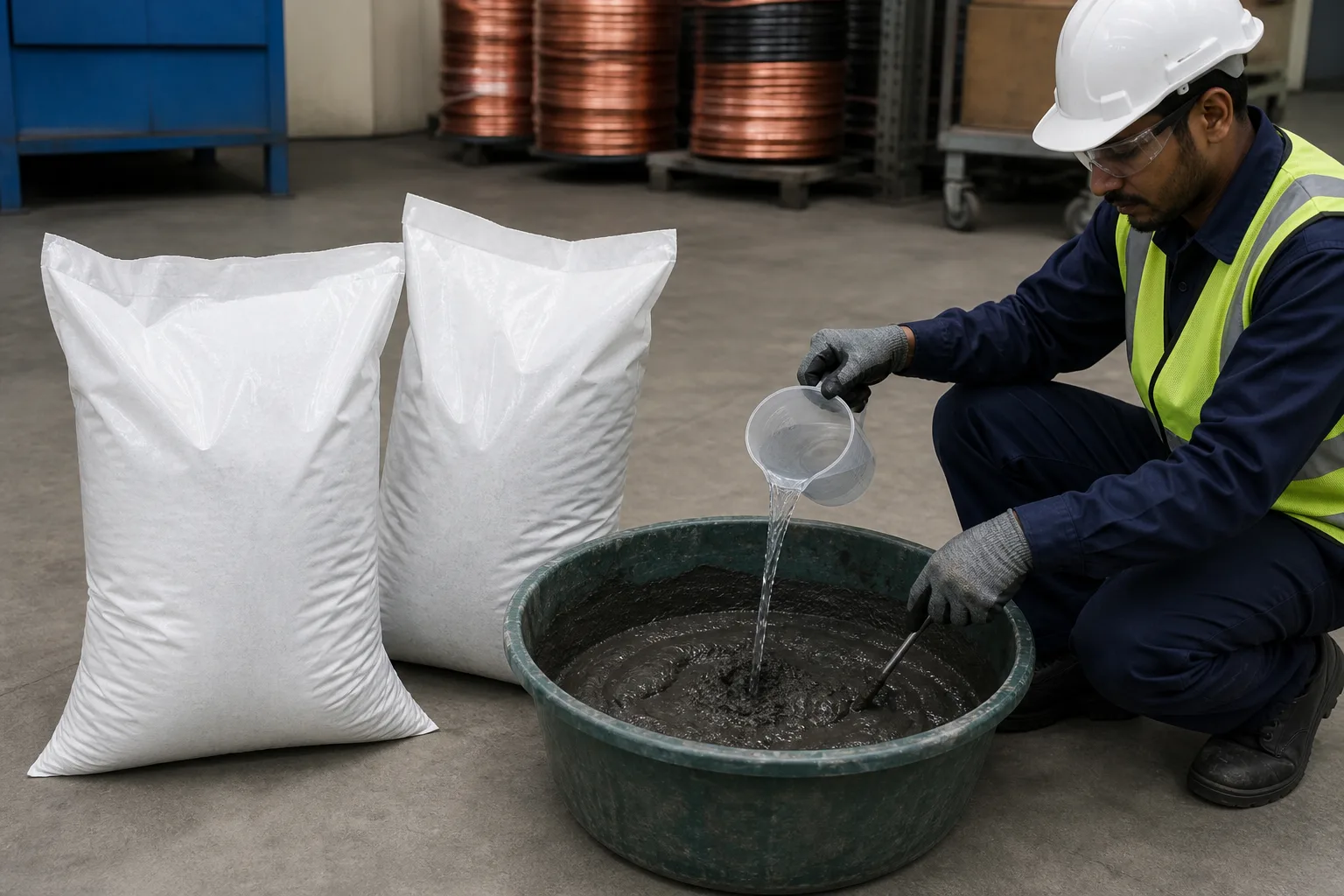
Spacing matters. Separate earthings need at least 2 metres of clear separation, while the supplied conductive compound is mixed with water before it is placed around the working length.
A display sample is not an installation detail. The offered electrode must enter the ground at its documented length.
Separate earthings need room between them. Mark the centres before boring starts, not after the first chamber is cast.
A finished chamber is not proof. Record the pit, method, instrument and connected condition with the reading.
Technical view
Start above ground. Confirm the earth duty, electrode model, underground services, access, soil condition and the approved location before a rig or auger reaches the mark.
Keep the drawing nearby. A pit moved to avoid a drain or foundation may also change spacing, conductor length and the relationship with the rest of the network.
Leave the joint reachable. The chamber should protect the terminal without burying the test point under loose soil, compound, concrete or an improvised cover.
Labels save time later. A durable pit identity tied to the drawing makes the next resistance test far less ambiguous, especially where several earth duties share one yard.
Cutting the rod is one. Dry powder near the cover, hidden joints, crowded pits and a reading with no recorded method can make tidy work difficult to defend.
Resistance is site-specific. No installer can promise one number from product diameter alone because soil, moisture, parallel paths and the connected network still control the result.
Decision sheet
Put the boundaries in writing. The quotation should separate supplied materials, civil work, conductors, testing and any corrective visit.
Working sequence
The sequence is deliberate. It keeps product selection, civil work and electrical verification in the same record.
Read the approved drawing and settle the electrode, conductor and inspection arrangement.
Locate services and keep separate earthings at least 2 metres apart before boring.
Place the unit vertically, wet-mix the compound and finish an accessible connection.
Record the method, instrument, condition and result against the correct pit number.
Questions that change the scope
No. A shortened electrode is no longer the documented product or the intended installation.
Not under the supplied 3E guidance. Mix it with water before placement around the electrode.
There is no honest universal count. The model, hole detail and approved arrangement settle the quantity.
No. The reading and its test context belong in the handover record.
Send the real inputs
Send the site location, earth duty, pit drawing, electrode schedule and testing requirement. We will mark the missing inputs before pricing the work.
Send the requirement on WhatsApp