
Asset register
Start with equipment and earth duties. A pit schedule without the protected assets leaves the network incomplete.
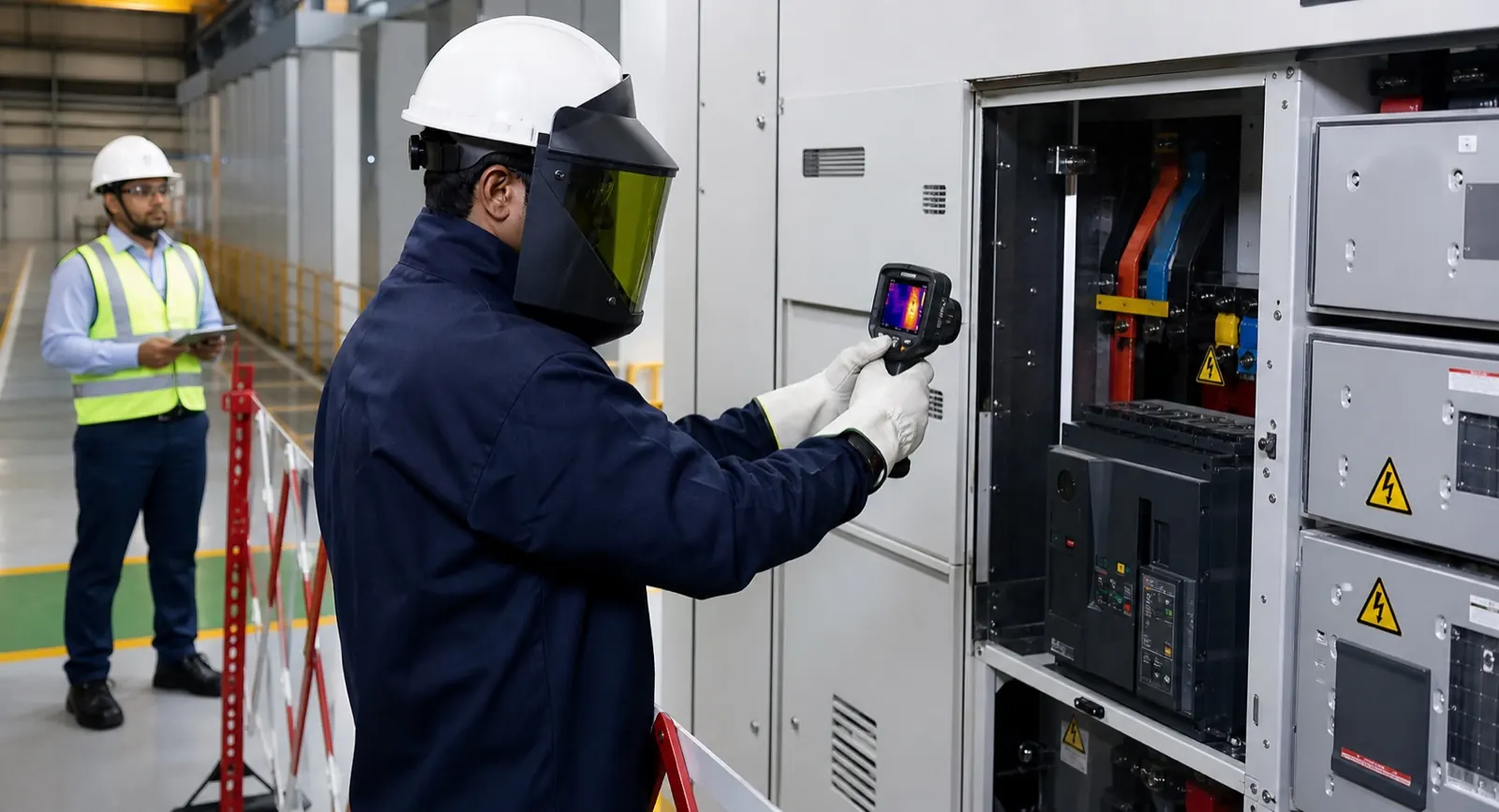
Industrial application
Plan industrial earthing around equipment, neutral, structural and lightning duties, with accessible test points and a documented earth network.
Discuss the project inputsDirect answer
A plant needs a documented network. Equipment bodies, neutral points, structural metal, lightning protection and incoming services should meet the approved bonding and protection design through identifiable routes.
Pits alone do not prove safety. Every important connection needs a duty, drawing identity, inspection point and test method that survives additions, repairs and production changes.
Start with equipment and earth duties. A pit schedule without the protected assets leaves the network incomplete.
Copper, GI, paint and corrosion meet at real connections. Specify compatible hardware and protection.
Context turns readings into history. Record the same identity, method and condition when comparing results.
Technical view
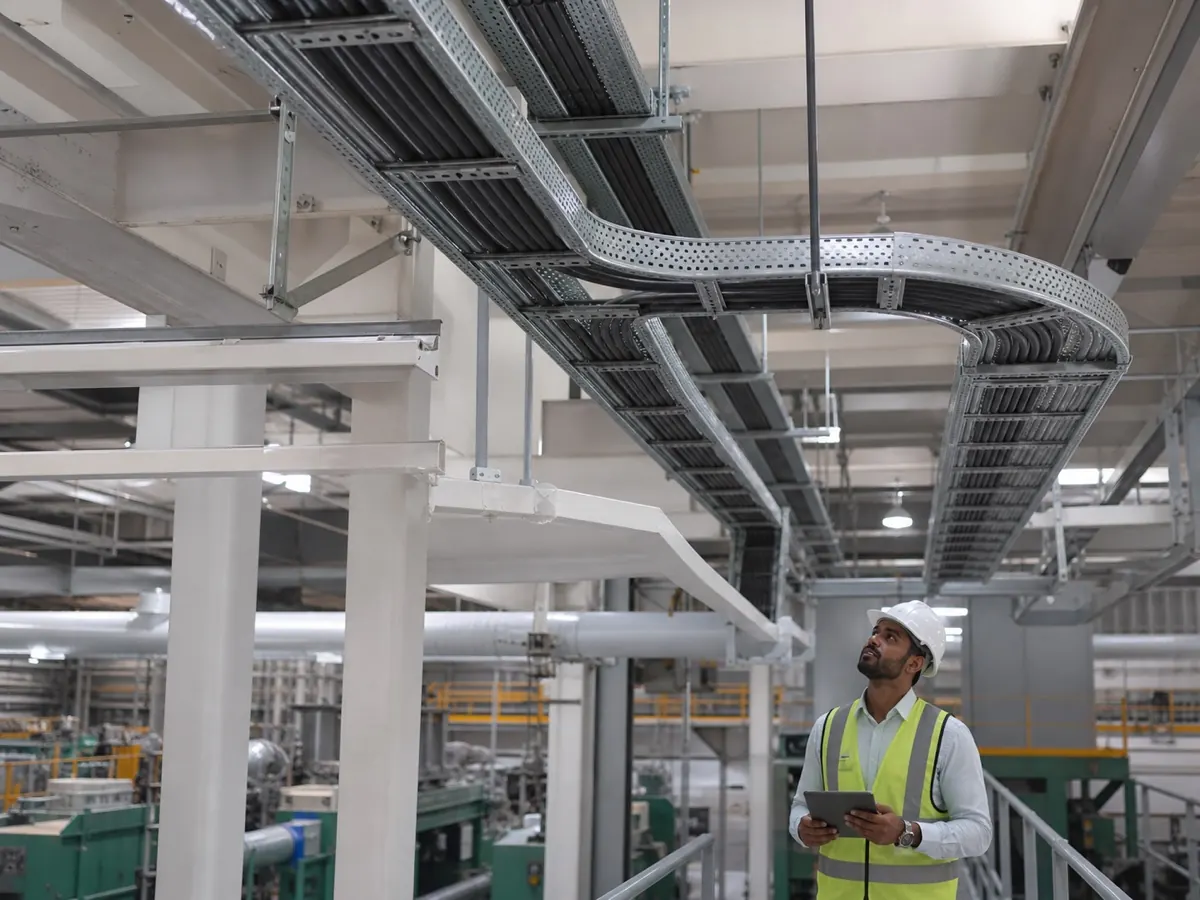
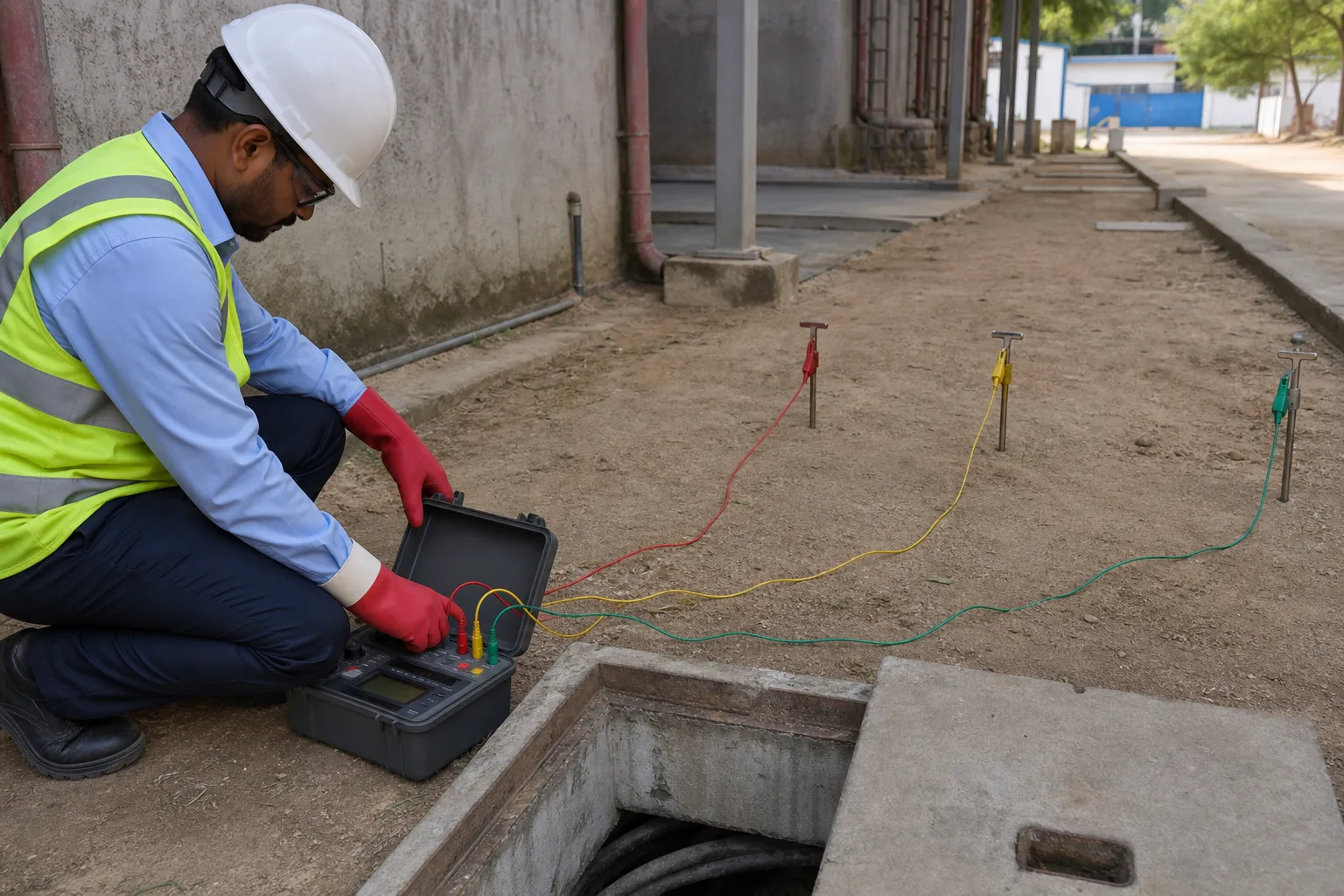
Walk the plant. Tie transformers, panels, machines, structures, utilities and lightning components to the earth duty and route shown on the latest drawing.
Expect surprises. Old extensions and replacement equipment often carry local pits or bonds that never reached the master record, which makes later testing deceptively tidy.
Joints age first. Exposed copper-to-GI contact, painted frames, flexible bonds, buried test links and repeatedly opened panels can weaken while the electrode remains serviceable.
Containment matters too. Tray sections and supports need continuity or bonding where the design requires it, including the awkward transitions around expansion and equipment entries.
Prioritise consequence. A broken bond on critical live equipment is not the same job as a faded pit label, even when both appear on one inspection sheet.
Keep production realistic. Plan isolation, access, temporary protection and retesting so the repair can be completed without leaving the network in an unknown intermediate state.
Decision sheet
Make the network searchable on paper. The next engineer should be able to move from an asset to its path and latest result.
Working sequence
Start with identity. Correction comes after the path and its duty are understood.
Match plant equipment and services to the current earthing and bonding drawings.
Inspect conductors, interfaces, links, containment bonds and accessible connections.
Record method, instrument, operating constraints and connected condition by identity.
Rank risk, plan isolation, complete work and retest the affected path.
Questions that change the scope
The approved network should control the arrangement. Unrecorded additions make protection and testing difficult to verify.
No. The conductor and every joint between the panel and network also matter.
No. Dissimilar-metal contact and exposure need compatible hardware and protection.
No. Selection and evidence are model-specific and still follow the project design.
Send the real inputs
Send the site single line, earthing drawings, pit list, latest readings and known plant changes. We will define the survey and record-reconciliation scope.
Send the requirement on WhatsApp